

If you manage a hospital estate, university campus, school or manufacturing facility, you’ll know this already, changes to building services get expensive once work starts on site.
The typical scenario when a building services feasibility study isn’t done first: a decision is made, a contractor is appointed, work starts…and then the surprises begin.
The existing systems can’t handle the load. There’s asbestos nobody accounted for. The electrical supply needs upgrading before anything else can happen. What looked like a straightforward project turns into something considerably more expensive and time-consuming than anyone planned.
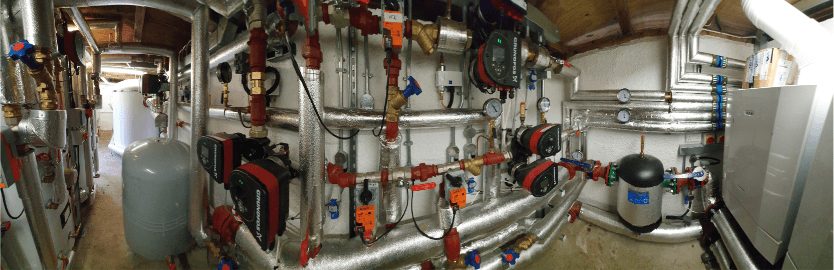
It doesn’t have to go that way. An in-depth mechanical and electrical feasibility study at the outset changes the picture entirely. Not because it adds extra process, but because it gives you clarity before serious money is committed.
A feasibility study identifies whether a project is technically possible within your existing infrastructure, what the realistic costs are, and what risks need to be addressed before design work begins.
Why do I need a feasibility study?
Net zero targets, decarbonisation commitments, ageing infrastructure, and changing building use are all creating real pressure to invest. At the same time, capital budgets are tighter than ever and nobody has the appetite for projects that overrun or throw up nasty surprises halfway through construction.
The result is that many organisations jump straight from identifying a need to appointing a contractor, skipping the step that would give them the clearest possible picture of what they’re actually dealing with. A building services feasibility study sits between ‘we know we need to do something’ and ‘we’re ready to go’.
Many buildings were never designed for the electrical loads they now carry. Adding something that seems simple, such as EV chargers or heat pumps, can quickly expose hidden constraints.
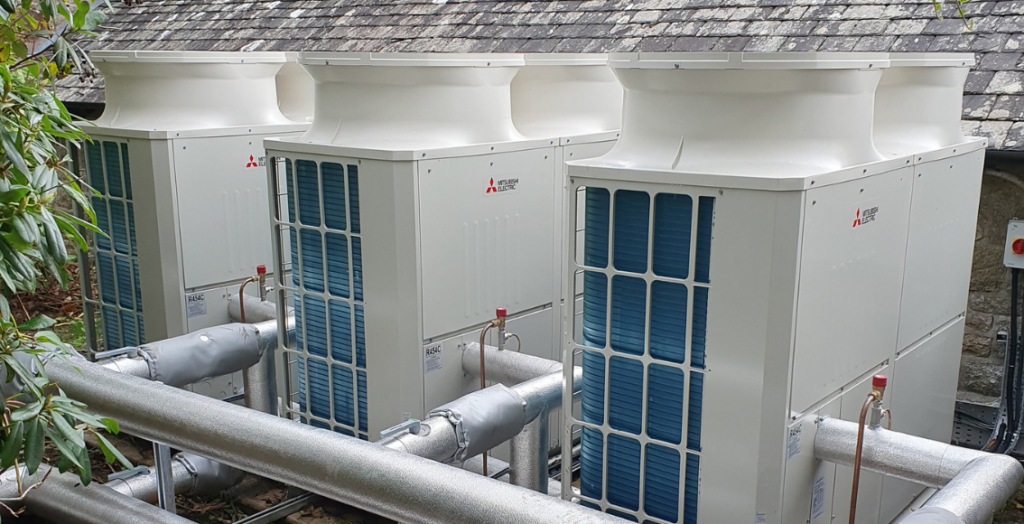
For example, installing EV chargers may require:
- additional transformer capacity
- upgrades to distribution boards
- new containment routes
- load management systems
- coordination with the DNO
Without understanding the current infrastructure first, projects often begin with assumptions rather than facts. And assumptions are where costs spiral later. A building services feasibility study removes those unknowns early.
What will a feasibility study actually provide me?
We completed a feasibility study for University Hospitals Morecambe Bay NHS Trust at their Westmorland Hospital site in Kendal. The Trust wanted to install solar PV panels and EV charging points, but needed to know whether it was viable, what it would cost, and whether it would stack up financially.
Our study identified the optimal location, a carport structure over the existing car park, flagged that the high voltage supply would need upgrading, and set out a projected 12-year payback period. That gave the hospital’s senior management everything they needed to make the decision to progress or not.
On another project for a manufacturing facility that was experiencing poor ventilation performance, our feasibility revealed that induction terminals were discharging directly onto high-level steelwork and plant equipment, disrupting airflow patterns and preventing proper destratification. The study allowed the client to replace air handling units with more accuracy and reducing costs from replacing poorly placed units.
That’s what a well-executed M&E feasibility study does. It gives you the information you need to make a sound decision.
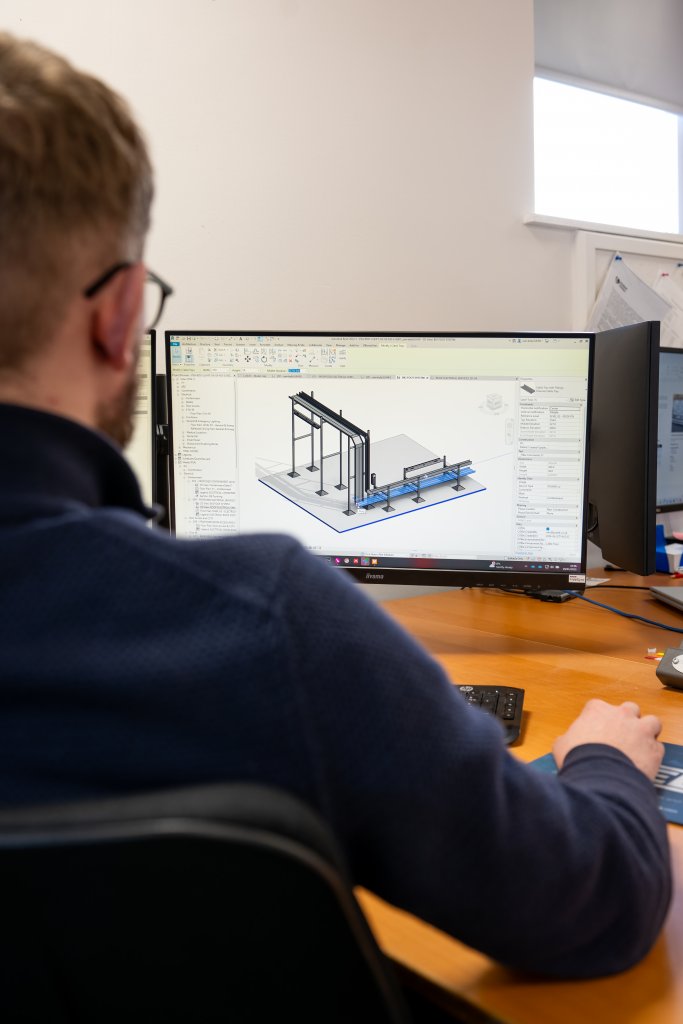
What a Mechanical and Electrical Feasibility Study Involves
A feasibility study goes far beyond a desktop review. It combines site investigation, engineering analysis and practical project planning. Depending on the project, it will typically include:
- Condition survey of existing M&E systems: What’s there, how old it is, and whether it can support what you’re planning.
- Electrical load capacity assessment: understanding what the current supply and distribution can handle, and identifying any constraints before additional demand is added (EV chargers, new equipment, building extensions).
- Options appraisal: Setting out the viable routes forward, including phasing options, so you’re not locked into a single approach before you understand the full picture.
- Whole-life cost modelling: Not just the capital cost of the works, but energy savings, maintenance implications, and return on investment over time.
- Risk identification: Flagging anything that could affect programme, cost, or compliance, including constraints like asbestos, heritage requirements, or grid connection limitations.
- Regulatory and compliance review: Confirming the proposed approach meets current requirements, with particular relevance in healthcare and education where sector-specific standards apply.
- Operational requirements: Many estates operate in live environments where disruption must be carefully managed. Feasibility studies help establish how works could be delivered in practice.
The cost of not doing a Building Services Feasibility Study
Budget overruns caused by unknown constraints: Electrical rewires in older buildings such as schools from the 1950s or hospital wards that haven’t been touched in decades, routinely uncover asbestos, outdated distribution boards, and supply capacity issues that weren’t in anyone’s plans.
At Millom School in Cumbria, widespread asbestos throughout a 1950s building meant the project needed a carefully phased two-year programme of works. That complexity was identified upfront and planned for, which meant the scheme could be managed and budgeted properly, rather than generating expensive surprises mid-construction.
Adding renewables or EV charging without understanding grid capacity: One of the most common issues we see with sustainability upgrades is organisations investing in solar PV or EV charging infrastructure without first checking whether the site’s electrical supply can support it.
If the existing high voltage supply is already at or near capacity, adding chargers or a PV system without infrastructure upgrades either won’t work or will create compliance and safety risks. A feasibility study identifies this before money is committed to equipment that can’t be connected properly.
Business cases built on assumptions rather than evidence: If you’re presenting a capital investment to a board, a finance director, or a funding body, you need numbers you can stand behind. For solar or renewable energy projects, our M&E feasibility studies provide a clear payback projection that incorporates infrastructure upgrade costs alongside the renewable energy benefits. That level of rigour is what turns a good idea into an approvable business case.
Scope misalignment between client, designer, and contractor: Disputes and delays during construction often trace back to scope that wasn’t clearly defined at the start. When everyone goes into a project with the same clear picture of what’s required, what the constraints are, and what the programme looks like, the chances of misunderstanding are significantly reduced. A feasibility study creates that shared understanding before the first line of design is drawn.
The measurable outcomes of completing a feasibility study
A well-executed mechanical and electrical feasibility study produces clear, measurable outputs that directly inform decision-making and reduce project risk. At the end of the process, you should have:
- A detailed cost plan for improved budget accuracy – not a rough estimate, but a properly developed cost model that accounts for all aspects of the project including required infrastructure upgrades.
- Return on investment analysis – for energy or sustainability projects, projected savings, payback periods, and carbon reduction figures you can use in reporting and funding applications.
- A costed options appraisal – typically two or three clearly priced routes forward, so decision-makers can choose the approach that fits their budget and priorities.
- A risk register – documented risks with proposed mitigation strategies, so nothing gets left to chance.
- A realistic programme outline – how long the works will take, how they can be phased around live operations, and where the key decision points are.
- Compliance clarity – confirmation that your proposed approach meets current M&E regulations, including any sector-specific requirements for healthcare, education, or manufacturing environments.
Why we start with a feasibility study – Get the right information before you commit
Every significant building services project, whether it’s a decarbonisation programme for a hospital, a complete electrical rewire for an ageing school, renewable energy for a university campus, or an M&E upgrade for a manufacturing facility, starts with the same basic question: what are we actually dealing with? A mechanical and electrical feasibility study answers that question properly, before money is committed and before work starts.
The cost of a study is modest compared to the cost of the projects it informs and a fraction of the cost of getting those projects wrong. If you’re planning works and haven’t yet done a feasibility study, it’s worth a conversation before you move forward.
Get in touch with the team at PSA to talk through where you are and what you need.


