

We recently sat down with one of our T-Level industry placement students to reflect on the time he spent with the PSA team. A hands-on introduction to building services engineering.
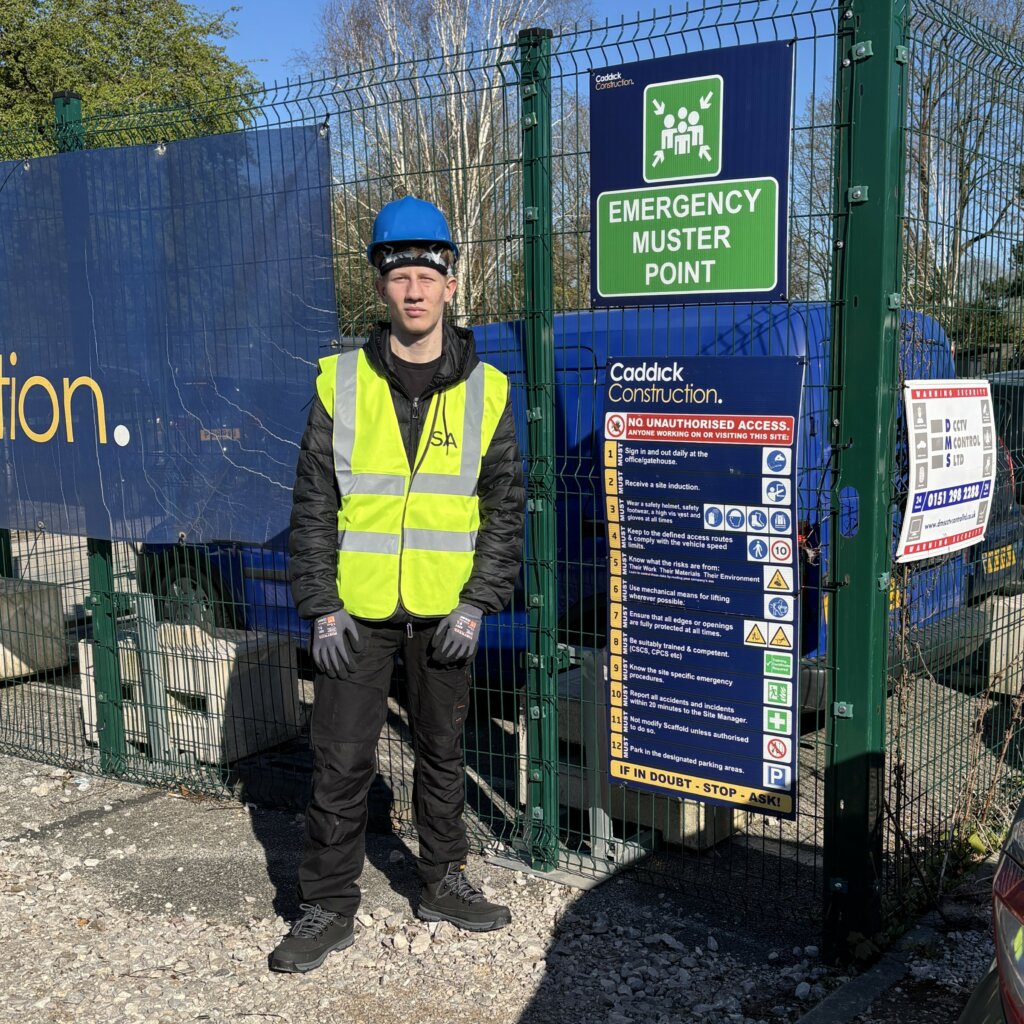
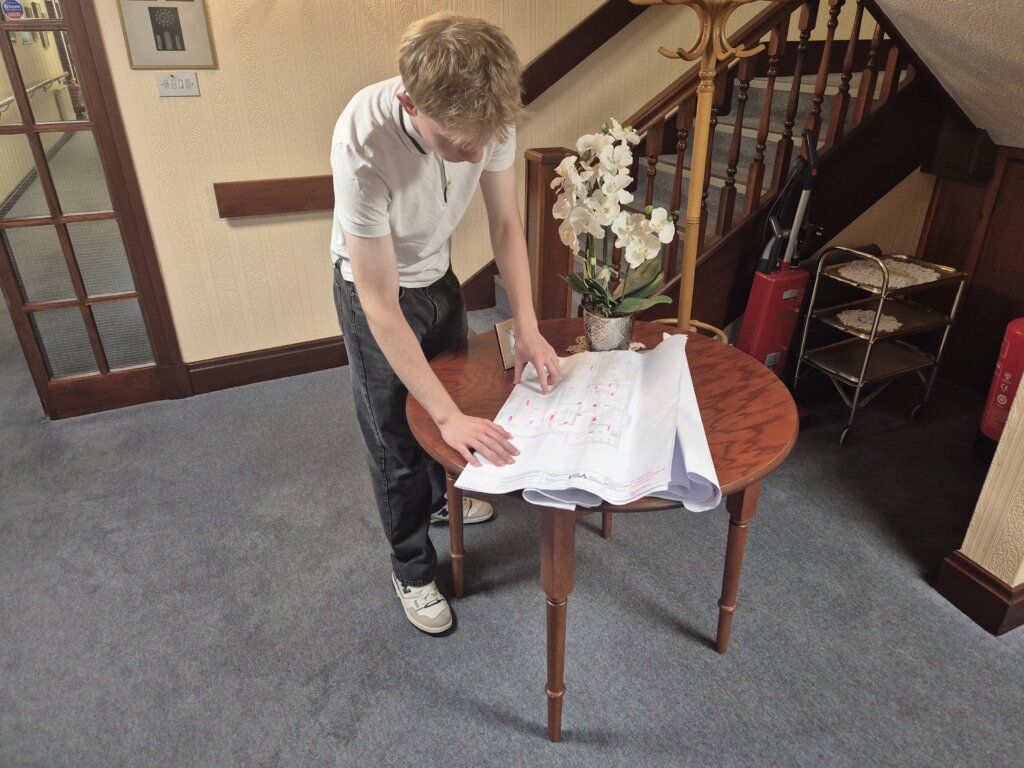
When Fabian arrived, the work was practical from day one, he was out with a laser measure mapping rooms, converting measurements and building his own CAD layouts.
CAD wasn’t new to Fabian, but the way he used it at PSA was different. “At college, I was doing things like assembling products. For my exam I had to design a safety barrier. Here it was much more about line tools, call units, legends. It was a different application of the same software.”
Even so, that distinction matters. Knowing a tool is one thing; knowing how professionals actually use it in practice is another.
Over the course of his placement, the work spanned a range of tasks. One project stood out: a site visit where he worked alongside one of our engineers. Here, Fabian worked alongside one of our engineers to map out fire alarm and call unit positions across multiple floors. Back at the office, he would take the floor plan layouts and place each unit accurately. Making sure he’d covered every room and that the units linked together.
When we asked what he’d worked on, he talked about lighting requirements. “I did so much research into luminaires, how much light output different spaces need, how to space fittings correctly. If you get it wrong, one area ends up too bright and another too dark. I had to understand the technical side to be able to place things accurately on the drawings. It took me a while to get my head around the terminology, but once I understood the principles, it clicked.”
Curious to know which elements he found more enjoyable. “The site visits, no question. Going out with Chris was brilliant, I could walk around and see what I’d drawn actually fitted out in real life. At one point, Chris spotted a serious hazard he had to flag. Seeing that kind of real-world problem-solving and understanding why the standards exist, made everything more meaningful.”
The biggest Placement Lesson
Beyond the technical skills, the placement gave him a broader understanding of where building services consultancy sits in the construction industry, and what it actually takes to do the job well.
“Honestly, I didn’t expect it to be so technical. I knew engineering involved computers, but I didn’t realise how much skill goes into the design side, how many standards you need to know, how much precision the job takes. There are some really clever people in this building.”
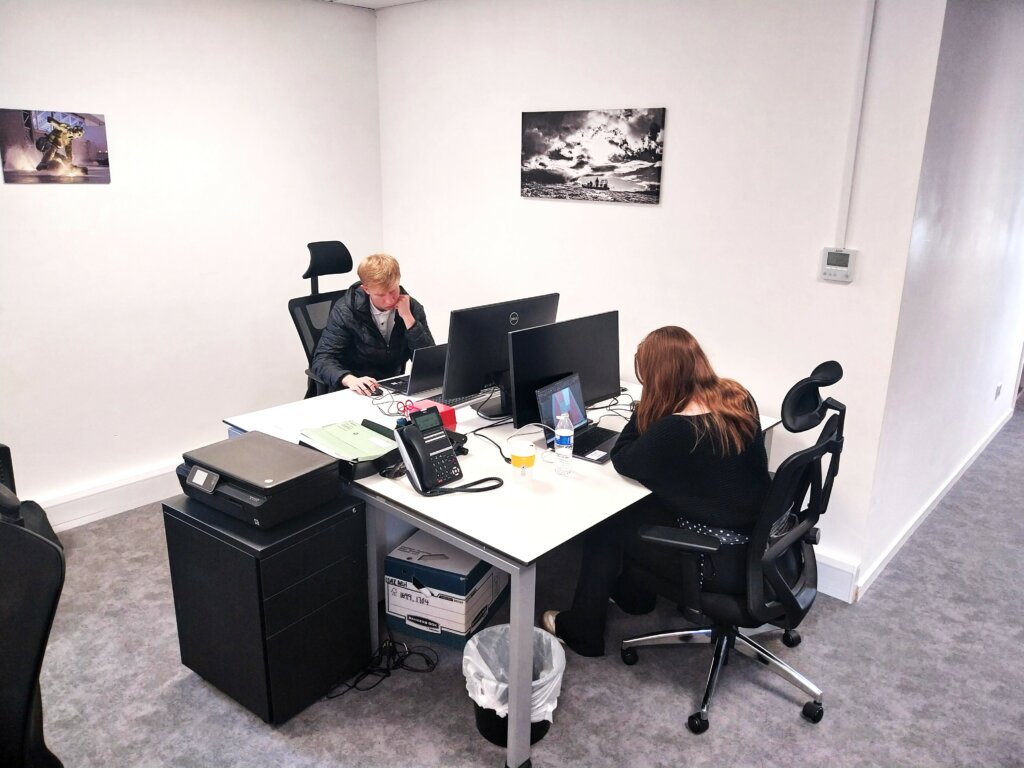
The CAD side surprised him, he was candid about it: “Coming into the placement, I was behind on CAD compared to my classmates. Most of them had done some sort of engineering or design at school and I hadn’t. Working here genuinely helped me catch up. By the time I went back to college assignments, I felt a lot more confident.”
Life After Placement
Thinking about his next steps he commented, “It’s made me realise how important it is to put yourself out there. I’ve got a full portfolio of evidence now, every project logged, every task documented. When someone asks me what I’ve been doing, I can actually show them.”
Ultimately, industry placements like this one are genuinely valuable, not just for the student, but for us too. Watching someone grow in confidence over 18 months, go from measuring rooms on day one to understanding lighting calculations and fire safety logic. It’s a reminder of why investing time in the next generation of engineers matters.
By definition, T Level placements require a minimum of 315 hours of industry experience. In practice, that means a student who’s spent real time in a working consultancy, understanding how projects flow from design through to site, something no classroom can fully replicate. Find out more about T-Levels here.
For more information on our T-Level Placements, get in touch.