

We recently spoke with our trainee electrical engineer about his path from qualified electrician to building services design through a degree apprenticeship. In this interview, he shares what it’s really like to balance studying electrical engineering while working on live healthcare projects, including the challenges of transitioning from site work to design, and why choosing an apprenticeship over a traditional university route was the right decision for his career.
Can you tell us a bit about yourself and what led you to pursue a career in building services engineering/design?
I became an electrician because I was handy and good at problem solving, my family encouraged me to get a trade which I thought would be a useful thing to have. During that time I spent some time following electrical drawings which I found interesting and part of my NVQ I completed some design work which was engaging and I wanted to pursue it further.
What made you choose an apprenticeship route rather than a full-time university course?
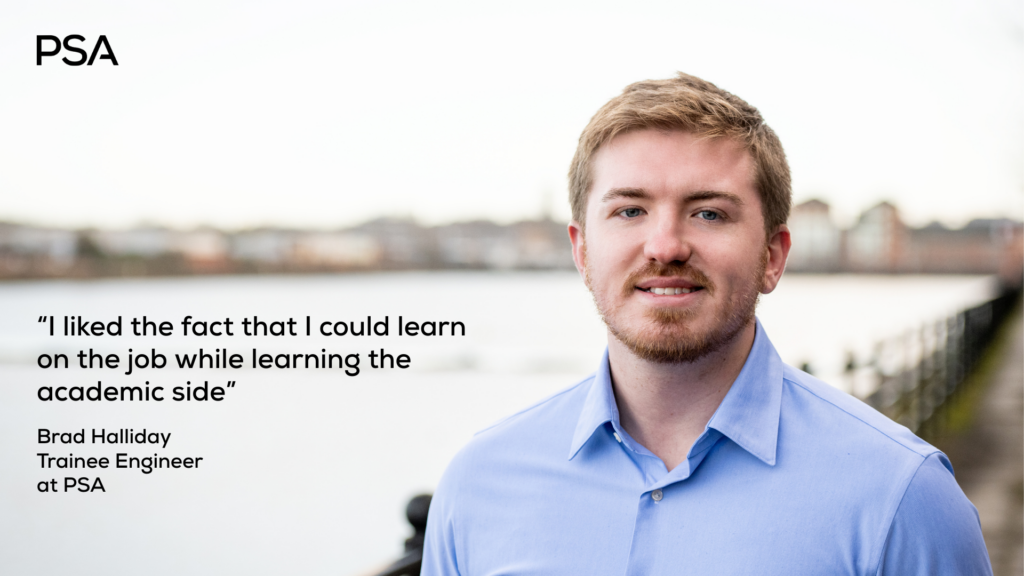
I’d done an apprenticeship before and I liked the fact that I could learn on the job while learning the academic side, the two go hand and hand and the degree provides the commercial aspects that are useful to understand on the job side.
What’s your role at PSA, and what does a typical day look like for you?
As a trainee electrical engineer I support the electrical team on a range of projects, a lot of my work is within the healthcare space working on projects for new build and refurbishments for hospitals within a lot of the North West Trusts. I assist with projects, do lighting calculations, liaise with manufacturers and coordinate electrical schemes.
How do you balance studying and working on live projects?
So far I’ve found it quite easy, I get Mondays at university of to study, or I study during weekends or evenings, which leaves me the rest of the week to focus on work. I’m in my first year so I’m sure as time goes by it will become a little tougher.
What have you learned so far that surprised you?
How much goes into the coordination between architects and other designers to avoid clashes and make the building work seamlessly, I didn’t realise before how much is involved.
Can you describe a project you’ve worked on that you’re particularly proud of?
Zoes Place. It’s a children’s hospice charity and the fact that it was such a heartfelt project to work on was one thing but also the building was super interesting because of all the different aspects of the building. There is so much going on in one space, there’s spaces for the children to feel calm and get respite, for families to stay with their children, then there’s clinical areas and commercial fundraising spaces. It’s a project I really enjoyed and got a lot out of.
What’s been the biggest challenge so far — and how did you overcome it?
The transition from being on the tools, being out and about, on my feet all day to being office based and working in front of a computer. Using a computer was not something I’d had to do at all so it’s been a bit of a learning curve for me.
What have you learned about the construction or building services industry that you didn’t know before?
The contractual chains between clients, contractors and designers. It’s been interesting as a designer to work with both sides and to understand the connections and relationships between everyone involved in a project.
How do you think building services engineering contributes to creating better buildings or environments?
How intelligent buildings are now, with the new Smart buildings and the connectivity between systems. Even with simple things like lighting or plumbing and how technology has advanced these things to make them so much more intelligent. Which is great for the industry and the future of these buildings making them more efficient.
How has your confidence or skill set grown since starting your apprenticeship?
My electrical knowledge has got even better than it was before. Being a qualified electrician gave me a great baseline knowledge of how it all works but being a designer means you have to think about things on an even deeper level because you have to think about why you’re designing things a certain way and all the whys and hows that I wouldn’t have had to consider before because before I was handed a ready made design and someone else had already done all that work for me.
Where do you see your career heading in the next few years?
I just want to keep learning and moving forward. I’m soaking up all the information I can from the people around me. I’d love to know more about the commercial side and how projects are priced and managing projects from the outside.
What’s one piece of advice you’d give to someone thinking about doing a degree apprenticeship in engineering or design?
If you can see yourself having a career in it, just do it, it might seem like a lot to take on but before you know it it’ll be done and you can focus on your career and moving yourself forward.
What’s the best thing about working at PSA?
The team camaraderie. Going from working on my own where I might be sent to a site alone for weeks at a time to coming here where there’s real team spirit and people really work together is amazing. I love that there is always someone to ask a question to or bounce ideas around with.
If you could design any building or system, what would it be?
The Line in Saudi Arabia. It’s this huge structure that’s a big glass 150 mile building taller than the Eiffel tower. The plan is to bring 9 million people into this community where everything is within one place and it’s designed in such a way that you can travel from one end to the other in about 20 minutes with no need for cars. It completely blows my mind and is going to take an unbelievable number of people to make it happen.
Find out more about the University of Lancashire Building Services and Sustainable Engineering Degree here.
Learn more about the career path of an engineer at PSA here.